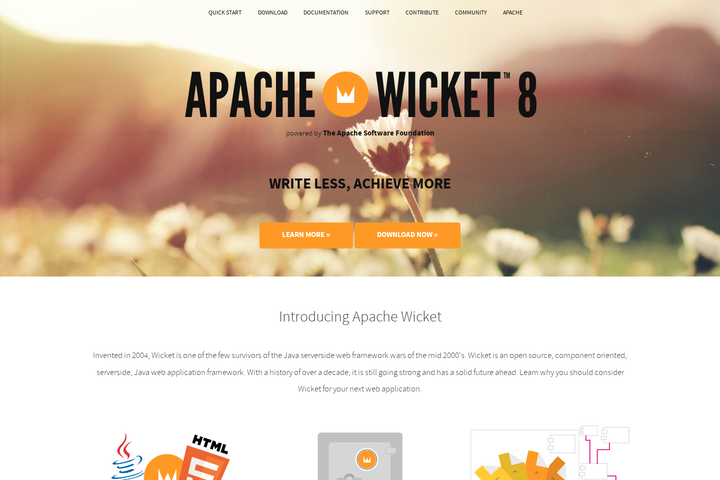
Apache Wicket site designs
Designs for wicket.apache.org, published side by side for comparison. The sketches show a homepage only; the full designs include every page. Content on the older designs is as of their date.
-
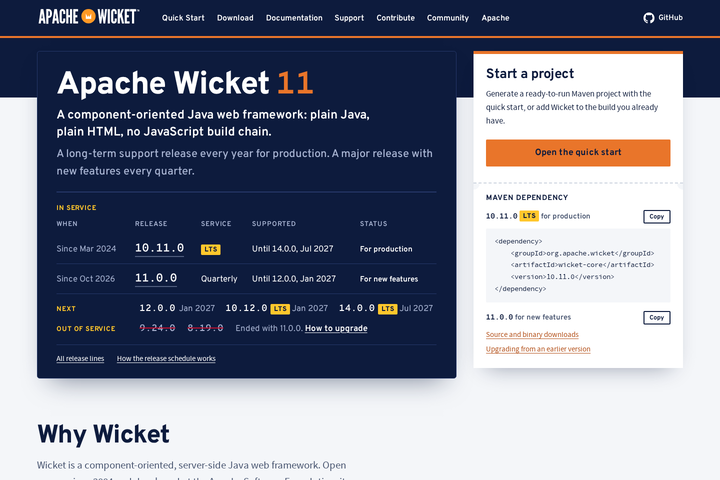
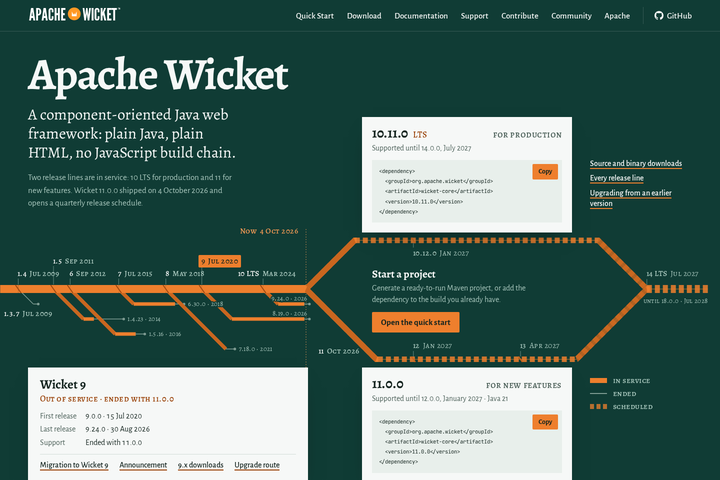
The departure board
October 2026
Station hall with a departure board of release lines, built for Wicket 11.0 and the quarterly release model, with the user guide as tutorials, how-to guides, reference and explanation.
-
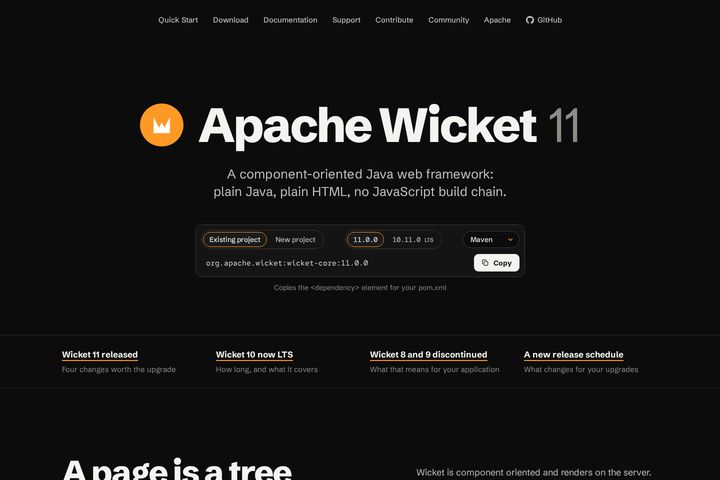
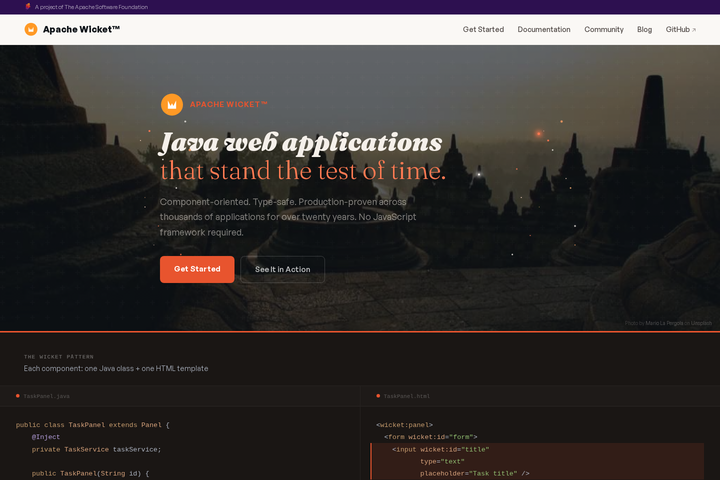
The reveal
October 2026
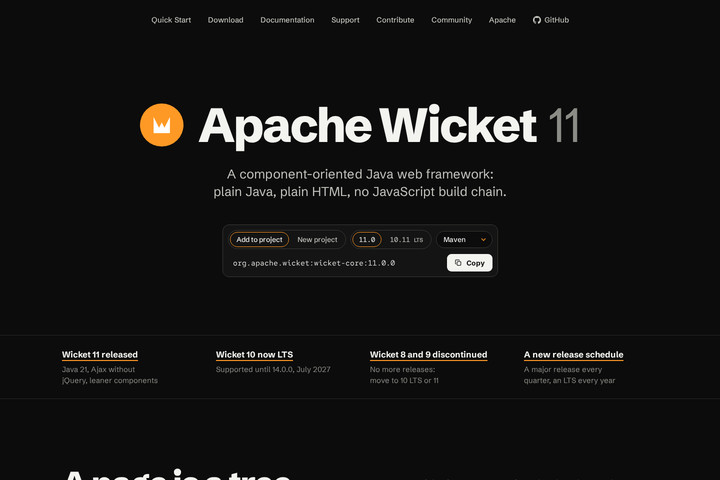
The reveal as a complete site: monochrome with Wicket orange, a homepage that builds a page's component tree step by step, every page restyled, and the user guide on the component tree.
-
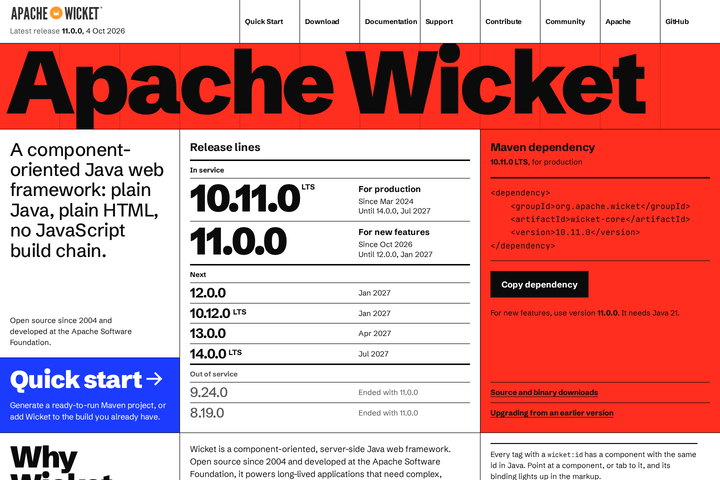
Sketch: grid system
October 2026
Homepage sketch in the Swiss International Typographic Style: a module grid with one committed field colour.
-
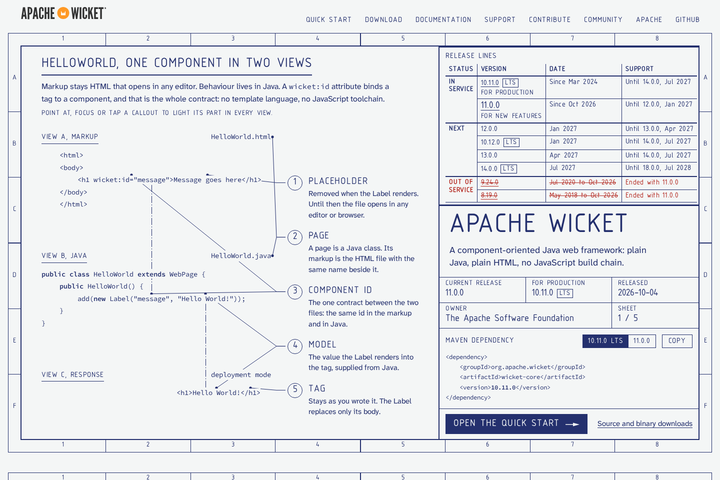
Sketch: drawing sheet
October 2026
Homepage sketch as an engineering drawing: Wicket drawn as a part in two views, releases in the revision table.
-
Sketch: reveal
October 2026
Monochrome with Wicket orange, after vercel.com/eve: scroll through seven steps that build a page's component tree in real code.
-
Sketch: component tree on bookcloth
October 2026
The original provenance ribbon's world without a photo: the component-tree ribbon enters from the left edge and opens the page.
-
Sketch: ribbon as component tree
October 2026
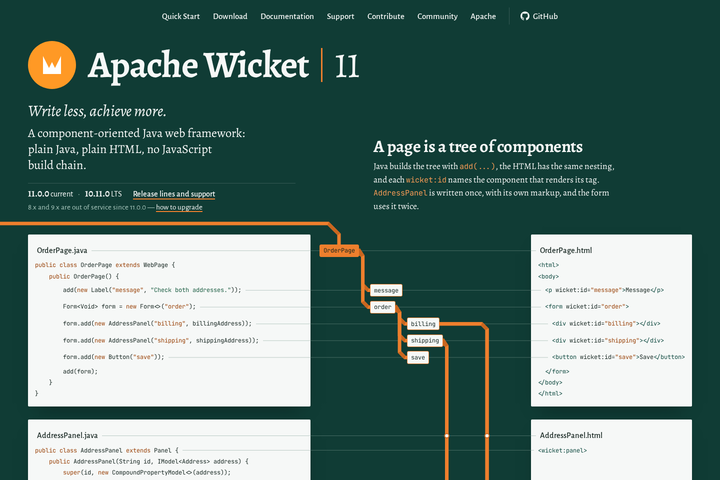
The ribbon runs through a page's component tree, joining each Java component to its tag; release facts shrink to one small block.
-
Sketch: ribbon with seasons
October 2026
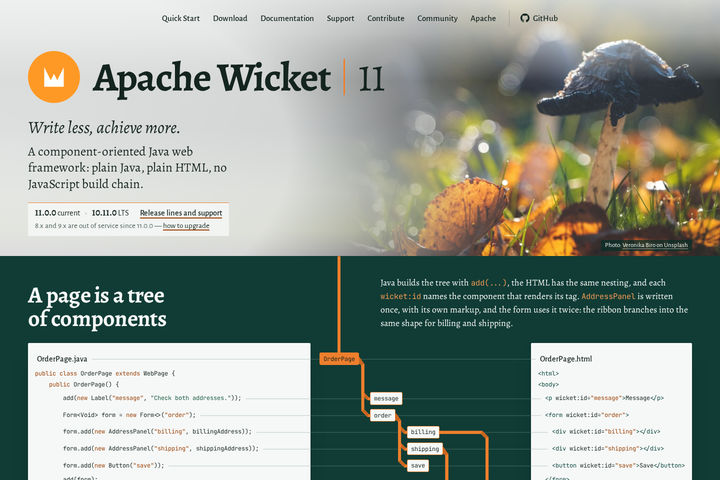
The provenance ribbon under a seasonal photograph, with the big logo lockup and a light body. Try ?season=summer or ?occasion=halloween.
-
Sketch: provenance ribbon
October 2026
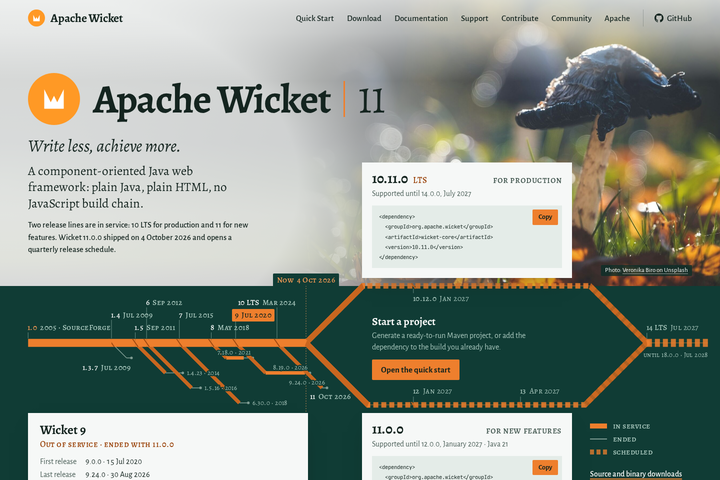
Homepage sketch that follows Wicket's release lines as one ribbon through twenty years, splitting at the present.
-
The April attempt
April 2026
The previous redesign, published at this address until October 2026.
-
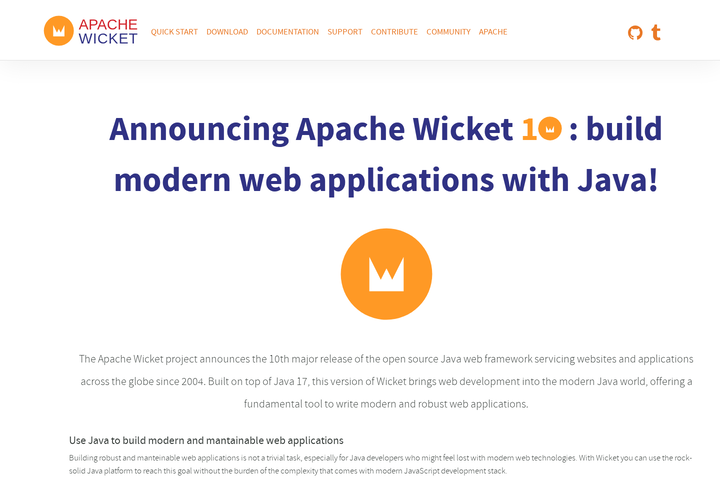
The current site
2015 to today
wicket.apache.org as it is live today, on the Taiga theme.
-
The 2020 layout
June 2020
Andrea Del Bene's new layout for Wicket 9, with content as of June 2020.
-
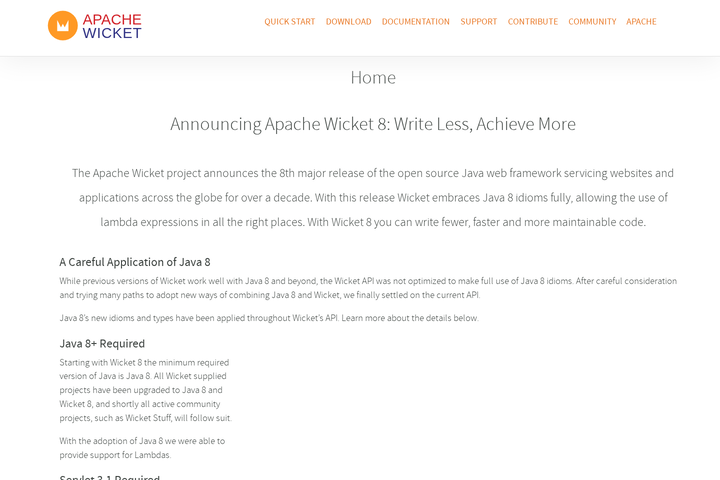
The Wicket 8 draft
May 2018
A first draft for the Wicket 8 site, with content as of May 2018.